
Most men do not heal, They distract
If sitting in silence feels like torture, you are not lazy or broken. You are likely carrying unprocessed pain and you have been surviving it the only way you were ever taught. By staying busy, staying numb, staying “fine.”
This post is for the man who can grind, provide, lift, and perform, but feels empty the moment the noise stops. It is also for the man who keeps snapping, shutting down, or sabotaging the people he cares about and cannot fully explain why.
The real problem is not your habits
It is what your habits are protecting you from
The transcript hits a painful truth: most men are not “fine.” They are avoiding a feeling that is too big, too old, or too unsafe to touch alone. Drinking, porn, work, social media, even nonstop productivity can all be coping mechanisms. They are not random flaws. They are strategies to avoid emotional pain.
And the cost shows up everywhere:
You overreact to small things
You push away people who love you
You feel numb even when life looks “successful”
You live with a low grade rage or emptiness that never fully leaves

Why “man up” made it worse
Strength without emotional skill becomes self destruction
A lot of men were trained to treat emotion like weakness. So they got strong everywhere else. Physically, financially, socially. But emotional capacity did not grow with the rest of them. The result is an adult body carrying a younger nervous system response. That is why a minor trigger can create a massive reaction.
Think of it like this:
If you never learned to process pain, you do not stop feeling it. You just stop feeling it consciously.
Then it runs your choices from the background.
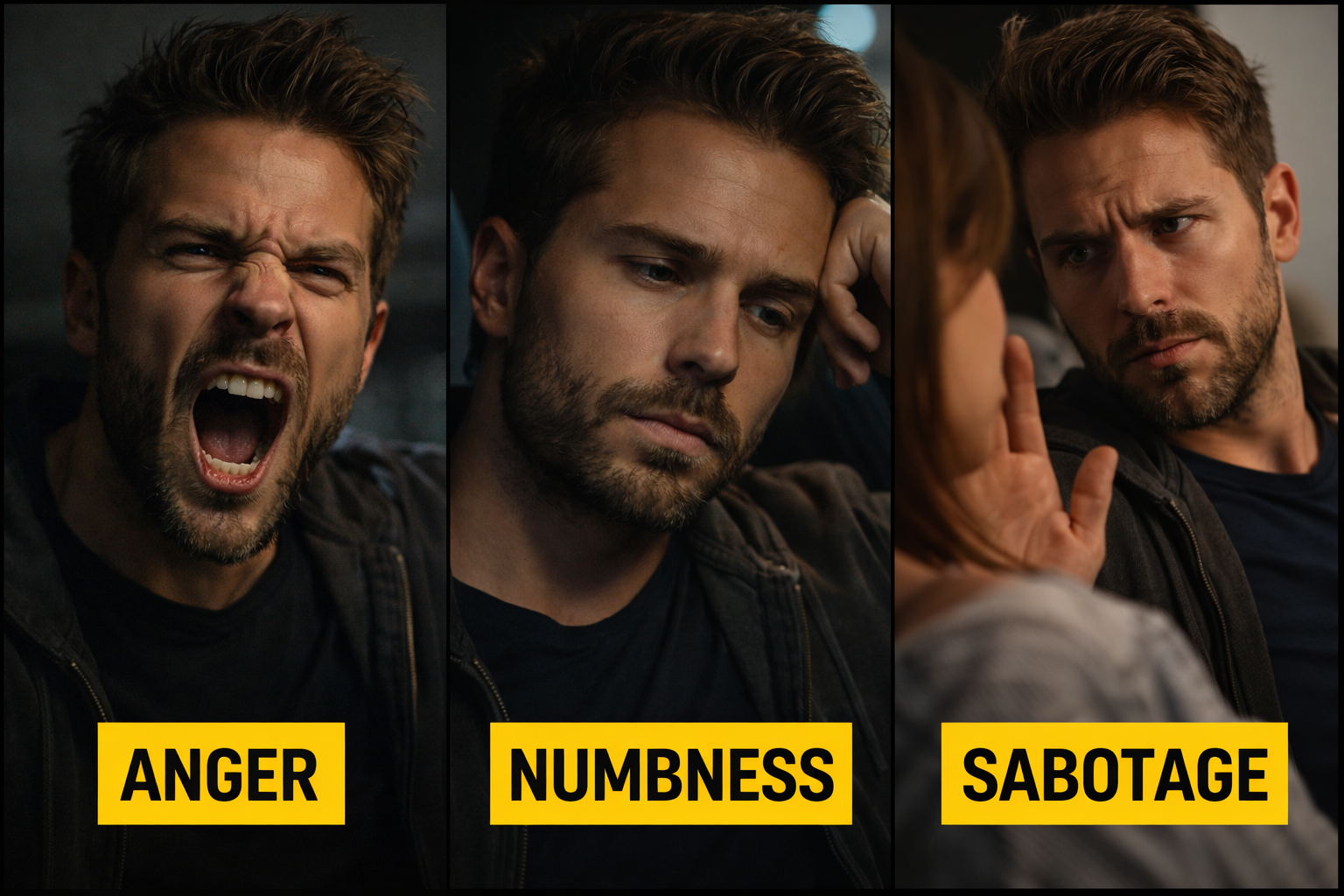
The three faces of unhealed trauma in men
Anger, numbness, and chaos
Unresolved trauma does not always look like crying. More often it looks like:
1. Anger over small things
You are not “just an angry guy.” You might be carrying old hurt that never had a safe exit. So it leaks out sideways.
2. Numbness and dead inside energy
When nothing excites you anymore, that is not laziness. It is suppression. Your system shut down feeling to survive.
3. Relationship sabotage
Jumping from relationship to relationship, or pushing away love, often connects to abandonment wounds and fear of being seen.
The brutally effective way to start healing
These are not “positive vibes.” They are nervous system retraining and truth telling.
Step 1. Sit in the pain for one hour
No phone. No TV. No music. Just you and the feelings you have been running from.
You will hate it. That is the point. The goal is not comfort. The goal is tolerance.
Try this structure:
Set a timer for 60 minutes
Sit upright, feet on the floor
Notice where the feeling lives in your body
Name it out loud: grief, shame, fear, rage
Breathe slow and let it move
Step 2. Call out your coping mechanism in real time
Every time you reach for the escape, pause and ask:
What am I about to do
What am I trying not to feel
What happened right before this urge
This turns autopilot into awareness. Awareness is the first crack in the prison.
Step 3. Rewrite the story
Your pain is real. But staying a victim of it keeps you stuck. The shift is not denying what happened. The shift is choosing what it means now.
Prompt:
What did I believe about myself back then
What do I choose to believe now
What would a powerful man do with this experience
Step 4. Get real guidance
You do not need endless nodding. You need someone who can challenge your blind spots and keep you honest. That could be a therapist, coach, or mentor who understands men and trauma responses.
Step 5. Do hard things on purpose
Cold showers, hard workouts, uncomfortable conversations. This is not punishment. It is exposure therapy for your nervous system. Each time you choose discomfort, you train yourself that you can survive feeling.
A simple weekly healing routine for men
Use this as a starting framework:
Daily
Ten minutes of silence, no input
One honest journal entry answering: what am I avoiding today
One discomfort rep, physical or emotional
Twice per week
One hour sit in the pain session
One conversation you have been avoiding, done respectfully
Weekly
Review your main coping pattern
Identify the trigger that drove it
Choose one new response for next week
If you want support, here is the clean next step
If you are serious about breaking the pattern and you want direct guidance, book a call here: https://calendly.com/theobstacleremover
FAQ
Is trauma only about extreme events
No. Trauma can come from what happened and what did not happen. Neglect, emotional invalidation, abandonment, or never feeling safe to express yourself can shape the same patterns.
Why do I feel successful but empty
Because external wins do not resolve internal pain. If your nervous system is bracing, the “good life” still feels unsafe to receive.
What if I try to sit in silence and I panic
Start smaller. Ten minutes. Then twenty. The goal is gradual capacity building, not forcing yourself into overwhelm. If it feels unmanageable, work with a professional.
The bottom line
If you do not deal with your trauma, your trauma will deal with you. The question is whether you will keep numbing until it costs you your relationships, your health, and your identity, or whether you will face it and take your life back.